
When a clogged drain is an emergency
A single slow bathroom sink can wait for a daytime appointment. A drain is an emergency when water has nowhere to go: a tub that fills when the washing machine empties, a toilet that bubbles when you run the kitchen tap, or any fixture that pushes sewage back up. Those signs point to a blockage in the main line, and every minute of running water adds to the mess on the floor.
What to do while you wait
- Stop using every sink, tub, shower, dishwasher and washing machine in the house.
- Skip the chemical drain openers. Caustic liquid sitting in a blocked pipe is hazardous for the technician and hard on older pipe joints.
- Move rugs and stored boxes away from the lowest floor drain or basement shower.
- Note which fixtures are affected. That detail tells us whether the clog is local or in the main line.
Kitchen sink clogs
Kitchen drains carry grease, coffee grounds and food scraps, and the grease cools into a paste on the pipe wall until the opening shrinks to a pencil width. If the sink drains into a garbage disposal, the disposal and its trap arm are the first places we check, and a stuck unit often needs its own garbage disposal repair rather than a longer cable.
A cable with a cutting head clears most kitchen branch lines. When grease has coated the pipe for several feet, a hydro jet leaves a cleaner bore and lowers the odds of a repeat call.
Shower, tub and bathroom sink drains
Bathroom drains clog with hair and soap residue that wraps around the stopper linkage or the first elbow below the fixture. Pulling the stopper and clearing the trap often fixes a tub in minutes. If water still stands after that, a small cable through the overflow or the drain opening reaches the junction where the tub meets the branch line.
Drain snaking, cabling and when we step up to jetting
Snaking and cabling are the same family of work: a rotating steel cable breaks through or retrieves the blockage. A cable opens a hole, but it does not scrub the pipe wall, so a line coated with grease or scale can clog again in weeks. High-pressure water from hydro jetting cuts through that coating and flushes it downstream.
| Symptom | Likely location | Usual first method |
|---|---|---|
| One sink or tub drains slowly | Trap or branch line | Hand tools, then a small cable |
| Kitchen sink gurgles and holds water | Kitchen branch line, grease buildup | Cable with cutting head, jet if coated |
| Toilet and tub both back up | Main drain inside the house | Large cable through the cleanout |
| Floor drain in the basement bubbles | Main line or lateral | Cable, then a camera inspection |
| Same drain clogs every few months | Roots, belly, scale or damaged pipe | Camera to find the cause, then jetting or repair |
Main line clogs and sewer backups
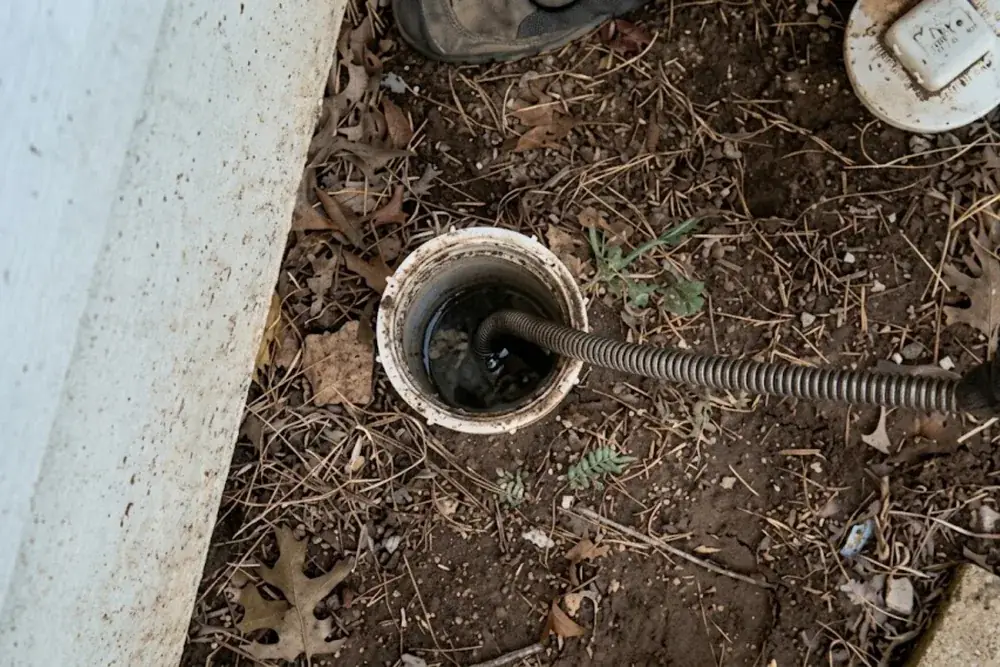
When the lowest fixtures back up first, the blockage is usually past the point where all the branch lines join. Reaching it takes a larger cable machine through the cleanout, and the full procedure is covered under sewer line cleaning. If the cable keeps hitting resistance at the same distance, we recommend a camera run before pulling anything out.
One local detail helps here. The South Adams County Water and Sanitation District says it handles sewer main backups and overflowing manholes and takes those calls at 303-288-2646, day or night. If a street manhole is overflowing or neighbors have the same problem, call the district. If only your house is backing up, the blockage is more likely in your own line, and the district can tell you where its responsibility ends and yours begins.
Water is rising and you are not sure where the clog is. Tell the dispatcher which fixtures are affected and a plumber can head your way.
Call (303) 552-3896Drain line leaks and slow drains that keep coming back
A drain that clears and then slows again is often a symptom, not the problem. Roots entering a joint, a low spot where waste settles, or a cracked section can all rebuild a clog. A small camera shows the pipe wall and lets us explain the trade-off between repeated cleaning and a spot repair.
Commerce City soil and housing notes
The Colorado Geological Survey calls expansive clay soil the state's most significant geologic hazard and lists disrupted sewer lines among its effects. Soil that swells and shrinks can shift a buried drain enough to create a low spot where waste collects, which is why a repeat clog in an older yard line is worth a camera look before another cleaning.
Drain pipe material varies from house to house in every part of Commerce City, and it affects how a line clogs. Rough clay or cast iron walls catch debris, while smooth plastic lines usually clog from grease or construction debris. We do not guess from the age of the area, and a camera shows which one you have.
What shapes the price
- Where the blockage sits
- A trap or fixture drain takes less time than a main line forty feet from the cleanout.
- Access
- A working cleanout speeds the job. With no cleanout, we may need to pull a toilet to reach the line.
- Method
- A cable costs less than hydro jetting, which in turn costs less than excavation or a repair.
- Camera work
- A camera pass adds time but can prevent a repeat visit.
- Time of day
- Night and weekend dispatch carries a different rate than a scheduled daytime visit.
Insurance note: homeowner policies often cover sudden water damage from a backup but not the cost of clearing the clog itself, and sewer backup coverage is frequently an add-on. Check your policy and photograph any damage before cleanup.
Want your real number? Call (303) 552-3896 and we will state the price before work starts.
Sources and standards
Commerce City adopted the 2021 International Plumbing Code (IPC) with local amendments, and its Building Safety Division at 303-289-3790 answers permit questions. The local amendments require building sewers at least 12 inches below grade (section 305.4.1) and a two-way cleanout (section 708.1.3).
Common questions
Yes. The line is open 24/7, including nights, weekends and holidays. Tell the dispatcher which fixtures are backing up, and we will explain what to avoid until the plumber arrives.
The washer pushes a large volume of water into the main drain, and a partial blockage downstream sends air and water back up through the nearest open fixture, often the tub. It usually means the clog is in the main line, not the tub drain.
We recommend against it. If the cleaner does not work, the pipe holds caustic liquid, and a technician working the line risks a splash. Hot tap water and a plunger are safer first steps for a single fixture.
If the manhole in the street is overflowing or several neighbors are backing up, the main is the likely cause and the district's emergency number is 303-288-2646. If only your house is affected, start with the cleanout on your own line.
Cleaning removes the blockage, not the cause. If the clog returns within a few months, ask for a camera inspection so the real cause, such as roots or a low spot, can be repaired.
Yes, and the work is covered on the commercial plumbing page, including after-hours calls when a business cannot open with a backed-up floor drain.
A backed-up drain rarely clears itself. Call the 24/7 line and a Commerce City plumber can be on the way today. We also dispatch to Brighton.
Call (303) 552-3896