
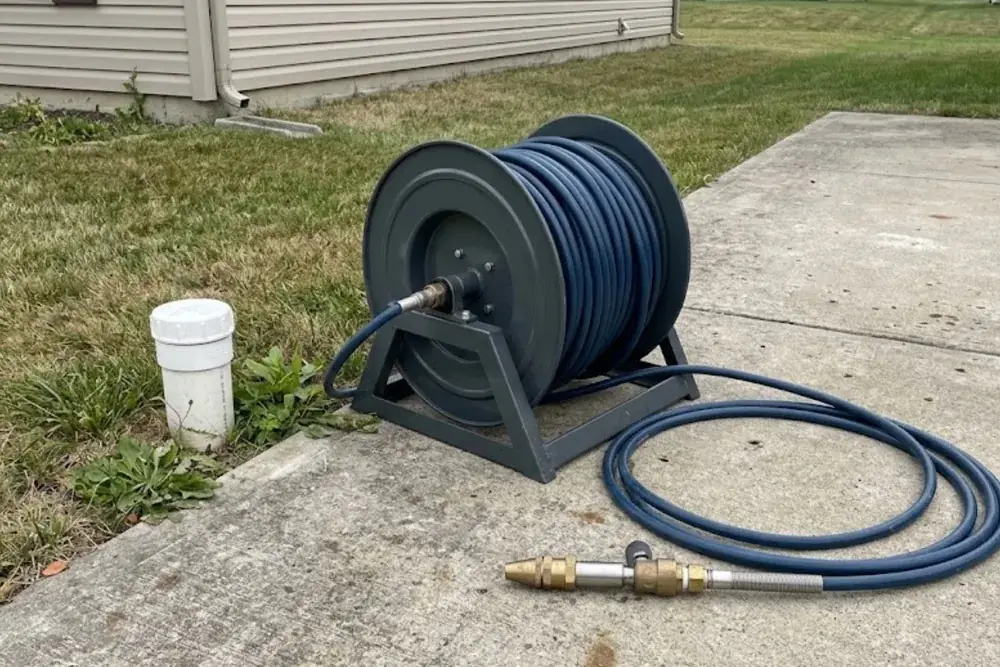
When a backup calls for hydro jetting
We recommend jetting when a cable has opened the line but the clog returns, when a camera shows heavy grease or scale, or when a restaurant or multi-unit building has repeated backups. A line that keeps closing every few months is telling you that the pipe wall is lined with material a cable cannot remove. Jetting clears that lining and gives the line its full diameter back.
What to do while you wait
- Stop all water use, including toilets, washers and dishwashers.
- Open the cleanout cap if it is accessible and safe, to relieve pressure and show whether the line is full.
- Keep people and pets out of the basement if sewage is backing up.
- Write down when the last backup happened. A history of repeat backups helps us decide on jetting.
How hydro jetting works
A specialized nozzle is fed into the line through the cleanout. Water exits through rear-facing jets, pulling the hose forward and spinning debris loose, and forward jets break up the blockage. The debris is flushed toward the main sewer, and the plumber runs the nozzle back and forth until the pipe wall is clean.
The pressure is adjustable. Residential lines use settings the pipe can tolerate, and a camera run beforehand helps us judge whether the pipe is sound enough for jetting at all.
| Situation | Best tool | Why |
|---|---|---|
| First-time clog in a healthy pipe | Cable | Fast and low cost |
| Clog keeps returning | Hydro jet | Removes buildup the cable leaves behind |
| Restaurant or building main line | Hydro jet | Heavy grease and frequent backups |
| Unknown cause or old pipe | Camera first | Shows damage before pressure is applied |
What jetting will not fix
Water pressure cannot repair a broken pipe. If the camera shows a collapsed section, a bad joint or a severe belly, jetting can make a damaged line worse and the answer is repair or replacement, as covered under sewer line repair. We say that up front so you do not pay for a service the pipe cannot use.
Roots, grease and scale
Tree roots enter at joints and spread into a thick mat. A jet with a cutting nozzle can clear the mat, but roots grow back, and a regular schedule or a repair at the entry point keeps the line open. Grease needs hot water and pressure, while scale is a mineral deposit that jetting can scrape from cast iron and clay pipe.
The cable did not hold, or the backup keeps coming back. Call the 24/7 line and ask about jetting.
Call (303) 552-3896Jetting after a camera inspection
The most efficient visit often pairs the two. A sewer camera inspection before jetting tells us what is in the line, and a second pass afterward confirms that the pipe wall is clear and shows any defects the buildup was hiding. You receive a record of the line's condition, which is useful when selling or buying a house.
Commerce City line conditions
The Colorado Geological Survey describes expansive clay soils as a leading cause of pipeline and sewer line disruption in the state. A buried line that has shifted slightly can hold water at a low spot, so before jetting an older yard line, we confirm with a camera that the pipe has no belly deep enough to trap the debris we are flushing.
The South Adams County Water and Sanitation District advises owners to remove trees and roots growing near or over sewer service lines. If your line runs under a mature tree, expect root work to be part of the conversation.
What shapes the price
- Line length and diameter
- A longer or larger line takes more time and water.
- Condition of the pipe
- A heavily scaled line needs multiple passes.
- Access
- A cleanout makes jetting simple. Without one, a toilet may need to be pulled.
- Camera inspection
- A camera pass before or after adds time but improves results.
- Timing
- Night and weekend dispatch is priced differently from a daytime visit.
Insurance note: a backup cleaning is often a maintenance cost, while resulting water damage may be covered under a sewer backup endorsement if you have one.
Want your real number? Call (303) 552-3896 and we will quote before the jet goes in.
Sources and standards
Commerce City adopted the 2021 International Plumbing Code (IPC) with local amendments, and its Building Safety Division at 303-289-3790 answers permit questions. The local amendments require building sewers at least 12 inches below grade (section 305.4.1) and a two-way cleanout (section 708.1.3).
Common questions
Yes. Dispatch is 24/7, and a main line that is overflowing at night is handled as an emergency. The plumber will decide on arrival whether to cable first or jet.
Not always. Clay, cast iron or older pipe with cracks should be camera-checked before pressure is applied, because jetting can enlarge existing damage.
A cable punches a hole through the blockage, while a jet scours the pipe wall clean with pressurized water. Jetting leaves a cleaner line and fewer repeat clogs.
It depends on the menu and the grease trap, but quarterly or semiannual jetting is common. See our commercial plumbing page for details.
It clears roots from the pipe but does not stop them from growing back. A cutting nozzle opens the line, and a repair at the entry joint stops regrowth.
Yes, especially when grease has coated the pipe. Many kitchen clogs are handled with a cable, and the technician will recommend a jet when buildup is heavy. See drain cleaning for the full list.
A line that keeps backing up needs more than another cable. Call the 24/7 line and ask whether hydro jetting fits your pipe.
Call (303) 552-3896