
Start by reading the clues
Where and when water appears says a lot. Water after rain or a sprinkler cycle suggests surface drainage. Damp spots along the base of a wall point to water at the footing. A single crack that weeps points to crack sealing. Dampness without puddles may be vapor, which needs humidity control rather than water barriers.
Type 1: surface drainage fixes
The least expensive and often most effective fix is to move water away from the foundation. This means extending downspouts several feet from the house, grading the soil so it slopes away, repairing the sprinkler heads that spray the wall and covering or draining window wells. These steps cost little and address the cause for many leaks.
Type 2: interior drain system and sump
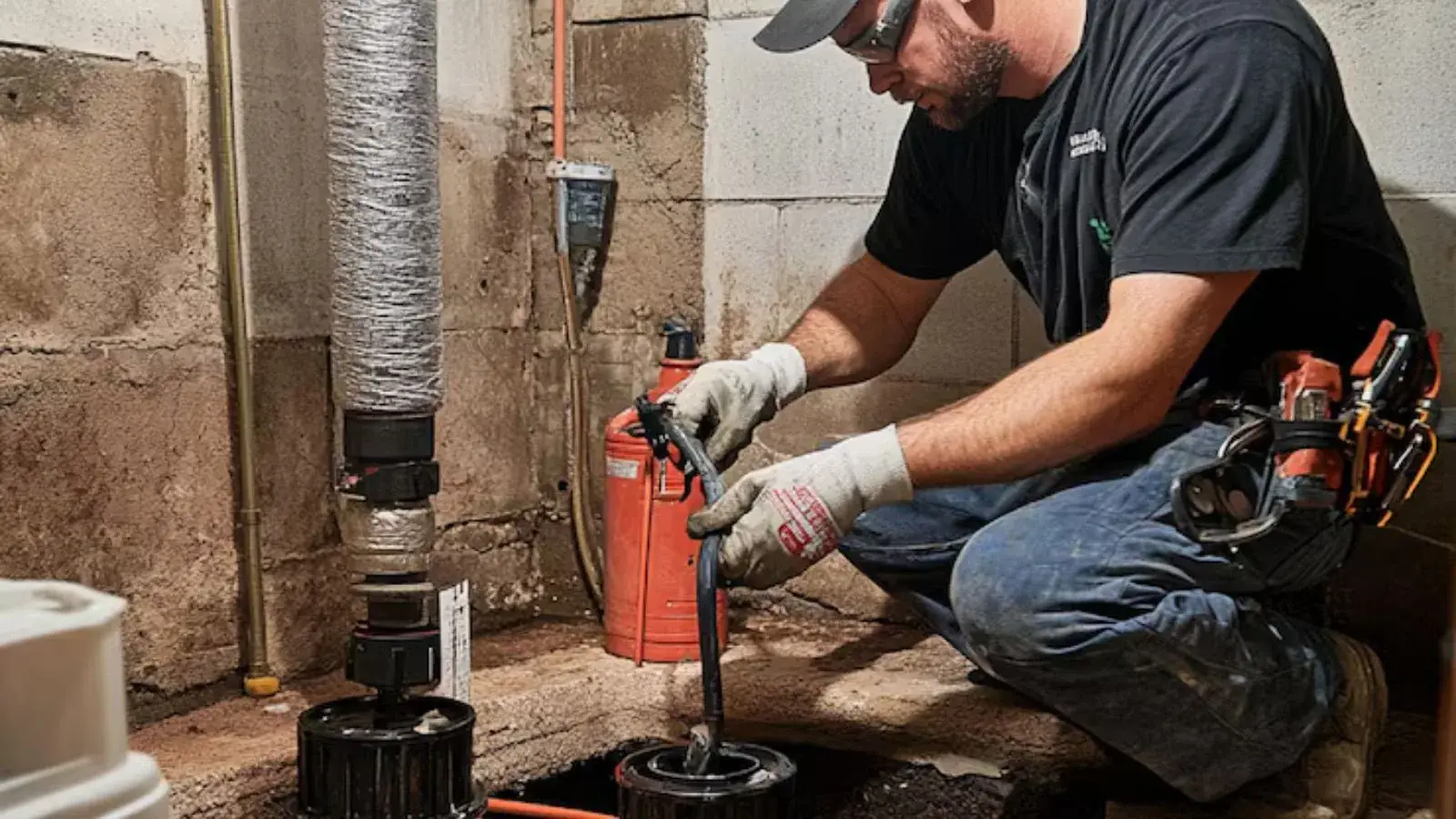
When water reaches the footing, an interior system captures it. A channel is cut around the inside of the slab, a perforated pipe goes in gravel and the water flows to a sump pit where a pump sends it outside. This handles groundwater without excavating the outside of the house and works well for finished basements.
| Type | Solves | Limits |
|---|---|---|
| Surface drainage | Water from roofs, grading and sprinklers | Does not handle rising groundwater |
| Interior drain and sump | Water at the footing and floor joint | Does not stop water at the wall |
| Crack injection | A single stable crack | Not for moving or many cracks |
| Exterior membrane and drain | Water at the outside wall | Highest cost and disruption |
| Dehumidifier and vapor barrier | Humidity and vapor | Does not stop liquid water |
Type 3: crack injection
Epoxy or polyurethane injected into a crack seals it from the inside. Epoxy bonds and is stiff, and polyurethane stays flexible and can seal a leaking crack under pressure. Injection fits a few stable cracks, but if the foundation is moving, the crack may reopen.
Type 4: exterior waterproofing
Exterior work excavates down to the footing, cleans the wall, applies a membrane, installs drain tile and backfills with gravel. It stops water before it touches the wall, but it is the most expensive and disruptive option and often involves landscape and patio removal. It is usually reserved for severe or recurring wall leaks.
Type 5: humidity control
Some basements have no leaks but feel damp. Concrete passes moisture vapor, and a dehumidifier, a floor vapor barrier and sealed windows reduce it. This is a low-cost step and often a part of a finishing plan.
How to compare quotes between methods
A fair comparison starts with the cause of the moisture. Water seeping through a crack from a high water table calls for a different fix than condensation from humid air. Ask each contractor what they measured or observed to reach their conclusion, whether they inspected the grading and downspouts outside, and what happens to the water once it is collected.
A drainage system needs somewhere to send water, which normally means a sump pump, and a pump needs a discharge location that is allowed by local rules. Ask what the warranty covers and whether it passes to a new owner.
What you can try first
Before spending on a system, extend downspouts several feet from the foundation, make sure the soil slopes away from the house and seal visible wall cracks. A dehumidifier helps if the problem is humidity rather than liquid water. These steps cost little and sometimes solve a damp basement outright.
Commerce City soil notes
The Colorado Geological Survey calls expansive soils the most significant geologic hazard in the state, and says they cause more property damage than any other natural hazard. It lists poor surface drainage, vegetation near the foundation and added water as factors, which is why surface drainage comes first on the list here.
The survey also says soil beneath a building site is often dry at construction, and that later wetting can bring expansion. A sump system or interior drain handles water that reaches the footing, while grading and irrigation changes address the cause. Commerce City lists finished basements among its permit items, so ask the Building Safety Division at 303-289-3790 before finishing one.
Choosing a plan
Begin with the least invasive fix and add steps as needed. A basement that is wet only after heavy rain may need only grading and downspouts. One that has water at the floor joint may need an interior system. Our basement waterproofing page describes the service, and sump pump installation and repair covers the pump side. We cover nearby Brighton homes too.
What to do before work begins
What to do while the basement is wet: shut off power to affected circuits, do not walk through standing water near outlets and move stored items up. Do not run a vacuum or tools plugged into wet outlets.
Sources and standards
Commerce City adopted the 2021 International Plumbing Code (IPC) with local amendments, and its Building Safety Division at 303-289-3790 answers permit questions. Check any plumber through the State Plumbing Board on the Colorado Division of Professions and Occupations site.
Common questions
Surface drainage fixes such as downspout extensions and regrading, which solve many leaks.
Only if water enters through the wall and other methods will not stop it. It is the most disruptive option.
For a stable crack, often yes. If the crack is moving, it may open again.
Colorado has expansive clay soils that swell with water and press on foundations. Good drainage reduces the risk.
The city lists interior alterations including finished basements among permit items. Call 303-289-3790 to confirm.
The right fix matches the way water gets in. Call and describe your basement. See our service area for nearby towns.
Call (303) 552-3896