
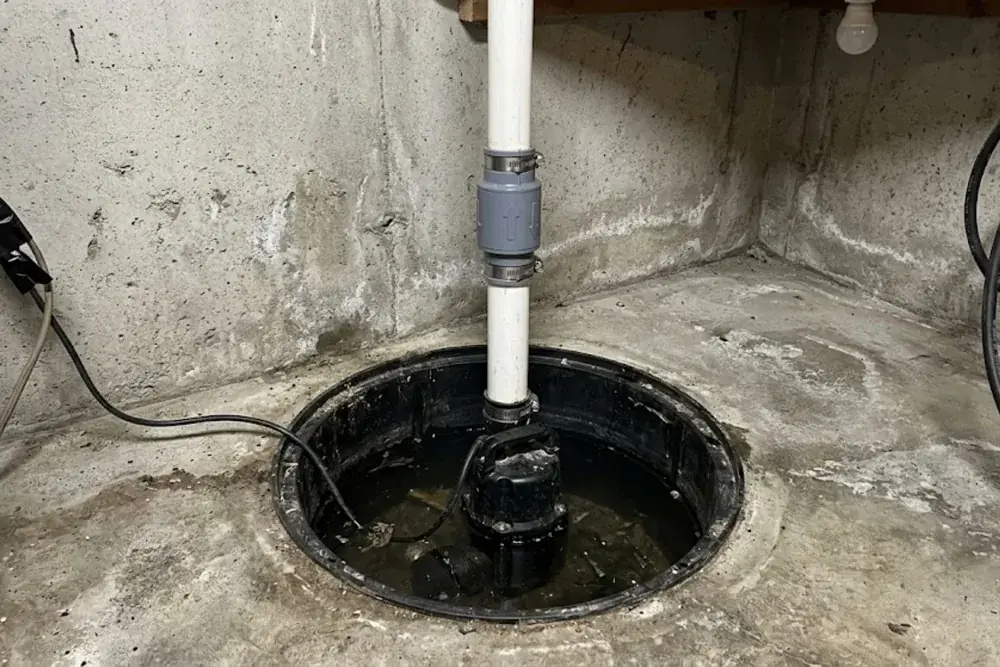
Replacing an existing pump
If you already have a pit, the job is to pull the old pump, install a new one, set a new check valve and connect the discharge. A like-for-like swap often takes an hour or two. The cost is mainly the pump and the labor, and it grows if the pit is damaged or the discharge needs rework.
Installing a new pit and pump
A new installation starts with cutting the slab, digging the pit, setting a liner and gravel and connecting any drain tile. The concrete is patched after the pump is placed. This is more labor, and the price rises with the size of the cut and the soil conditions.
| Item | What affects the price |
|---|---|
| Pump type | Submersible costs more and lasts longer than a pedestal pump |
| Horsepower | Higher flow and lift need a larger motor |
| Pit | New pit, liner and lid versus reusing the old pit |
| Check valve and discharge | New valve, pipe length and frost protection |
| Backup | Battery or water-powered system adds parts and labor |
| Alarm | A high-water alarm is a small added cost |
| Permit | Permit and inspection fees if required |
Submersible versus pedestal
A submersible pump sits inside the pit, runs quietly and is cooled by the water around it. A pedestal pump sits above the pit on a stand, is cheaper and is easier to reach, but it is louder and often has a shorter life. Most homeowners choose submersible, especially for a finished basement.
Battery and water-powered backups
A battery backup runs a second pump when the power fails. The battery needs testing and replacement every few years. A water-powered backup uses municipal water pressure to run a venturi pump and needs no battery, but it uses water while running and needs a suitable supply and drain. Each adds cost and a layer of protection, and which one fits depends on how severe the flooding risk is.
Discharge and frost
The discharge line carries water out of the house. A line that is too short or empties near the foundation lets the water flow back, and a line that freezes can cause the pump to run constantly. A longer discharge, a freeze-relief fitting or burial adds cost but keeps the system working in winter.
Pump types and why they change the price
Two designs dominate. A submersible pump sits in the pit, runs quietly and handles most homes. A pedestal pump has its motor above the pit, costs less and lasts longer when it is serviced, but it is louder and takes more space. A pump with a float switch is cheaper, while a vertical float or electronic sensor can resist sticking.
Horsepower and the height the water must be lifted also shape the choice. If the pit is cracked, undersized or missing a lid, the work grows beyond a swap.
Backup power and alarms
Pumps tend to fail during the storms that fill the pit fastest, and storms often take out the power. A battery backup pump, a water powered backup or a high water alarm each add cost but protect a finished basement. Ask whether the discharge line has a check valve, because a missing one lets water run back into the pit and makes the pump cycle constantly.
Also ask where the discharge line ends, since it should carry water well away from the foundation.
Commerce City notes for planning
The Commerce City list of permit items names sump pumps. The city refers to its 2021 plumbing code as the City of Commerce City Plumbing Code, so ask the Building Safety Division at 303-289-3790 about permits and inspections, because fees and scheduling belong in your budget.
The Colorado Geological Survey notes that poor surface drainage and water applied near foundations contribute to expansive soil problems. Adding extended downspouts and adjusting sprinklers costs less than a pump and reduces how often your pump has to run.
Getting a clear quote
Ask what pump and horsepower are included, whether the check valve and discharge are new, whether a backup is part of the price and who handles the permit. A good quote lists each item. Our sump pump installation and repair page covers the work, and if the basement is damp for reasons that a pump cannot fix, basement waterproofing may be part of the plan. We also serve Brighton.
What to do before work begins
What to do before replacing a pump: unplug it first, never reach into a pit with the power connected, and do not stand in water near outlets. If the pit is overflowing, call and move valuables off the floor.
Sources and standards
Commerce City adopted the 2021 International Plumbing Code (IPC) with local amendments, and its Building Safety Division at 303-289-3790 answers permit questions. Check any plumber through the State Plumbing Board on the Colorado Division of Professions and Occupations site.
Common questions
Often an hour or two for a like-for-like swap. A new pit takes a day or more.
The city lists sump pumps among permit items. Call the Building Safety Division at 303-289-3790 to confirm.
If a power outage could flood a finished basement, yes. Storms that bring water often cause outages.
Many last seven to ten years. Test yours every few months and replace it if it is noisy or slow.
The geological survey links expansive clay soil problems to water near foundations, so grading and downspouts matter as much as the pump.
A pump quote should list every item. Call and describe your basement, and we will explain the price before work starts. Our service area covers nearby towns.
Call (303) 552-3896