
When a slab leak is an emergency
The sudden signs are urgent: water bubbling up through a crack, wet carpet that returns after drying, or a hissing sound that does not stop.
A hot water line leaking under the slab also wastes energy and can heat the floor to the point where you can feel it with bare feet. A slow slab leak may take weeks to show up as a high bill and a damp spot, but the damage to the soil under the concrete is ongoing.
What to do while you wait
- Close the main shutoff valve and open a faucet to relieve pressure.
- Turn off the water heater to stop it from refilling as the lines drain.
- Roll back wet carpet and run fans to protect the subfloor, if safe.
- Check the meter and record the reading before and after the main is closed.
Signs of a slab leak
- A warm or hot patch on the floor, especially on tile or concrete.
- The sound of running water when all fixtures are off.
- A sudden jump in the water bill without a change in use.
- Cracks, damp spots or mold on the floor, baseboards or walls near the slab.
- Low water pressure or water that stays warm in the cold line.
A single sign can have other causes, but two or three together make a slab leak likely, and a quick check confirms it.
How we locate the leak
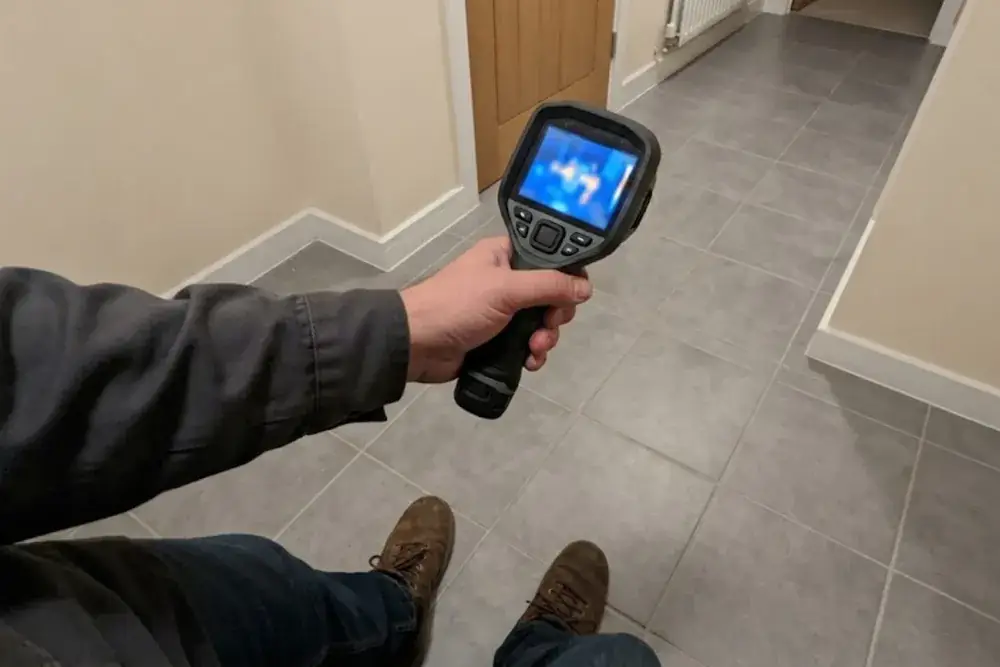
We isolate the line by pressure testing hot and cold sides separately, then use acoustic listening devices and a thermal camera to trace the path. Pinpointing the leak to within a small area is the most valuable step, because it decides how much floor, if any, needs to come out. Broader detection methods are described on the leak detection page.
Repair options
There are three common paths. Spot repair breaks into the slab at the leak, replaces the section and patches the concrete. Rerouting abandons the leaking line and runs a new one through walls or the attic. Repiping replaces all the lines when several leaks have appeared, as described on the repiping page.
| Option | Best when | Trade-off |
|---|---|---|
| Spot repair | One leak, accessible floor | Breaks concrete, flooring patched |
| Reroute | Line in a hard-to-reach place | New pipe in walls or attic |
| Repipe | Multiple leaks, aging copper | Larger project, longer-lasting |
A warm floor or a meter that will not stop. Call the 24/7 line and a plumber can start the leak check.
Call (303) 552-3896Why slab leaks happen
Copper lines can corrode from water chemistry or from rubbing against concrete and gravel as the slab flexes. Soil movement can stress the pipe, and high pressure speeds the wear. Many slab leaks appear on lines that were run through the slab decades ago, but they can also show up in newer homes where a pipe was kinked or nicked during construction.
Commerce City ground and foundation notes
The Colorado Geological Survey says expansive clay soils can exert pressures of 20,000 pounds per square foot or more on foundations and slabs and are the state's most significant geologic hazard. A slab that rises and falls with soil moisture flexes the pipes cast inside it, so a slab leak in this region is worth examining for soil movement, not just pipe age.
Poor surface drainage and watering right next to a foundation add water to the soil, which the geological survey links to expansion damage. Directing downspouts and sprinklers away from the slab is a cheap step after any slab repair.
What shapes the price
- Leak location
- A leak under a hallway is easier to reach than one under a kitchen island or tile.
- Repair path
- Spot repair, reroute and repipe have different costs and timelines.
- Flooring
- Tile, wood and carpet each have different patching costs.
- Detection
- Pinpointing time and equipment add to the price.
- Number of leaks
- Multiple leaks may justify a larger repair.
Insurance note: some policies cover the resulting water damage and the access work needed to reach the leak, while excluding the pipe itself. Ask your insurer about slab leak coverage before work starts.
Want your real number? Call (303) 552-3896 and we will explain the price before work starts.
Sources and standards
Commerce City adopted the 2021 International Plumbing Code (IPC) with local amendments, and its Building Safety Division at 303-289-3790 answers permit questions. The local amendments require exterior water supply lines at least 42 inches below grade (section 305.4).
Common questions
Yes. The 24/7 line takes slab leak calls any time, and the first step is to close the main valve and describe the signs.
Sometimes. Rerouting the line through the attic or walls avoids concrete work, and the choice depends on where the pipes run and how many leaks exist.
A pressure test and a meter check isolate the line, and listening gear finds the spot. A warm patch on the floor strongly suggests a hot water line.
Persistent water can erode the soil below a slab and add to settlement. Prompt repair limits that risk.
Coverage varies. Many policies cover the damage and access work but not the pipe repair itself, so call your insurer early.
Basement homes can still have slab areas in garages, additions and walkouts. A basement leak is a different search, described under leak detection.
A slab leak will not stop on its own. Call the 24/7 line and a Commerce City plumber can plan the right repair path.
Call (303) 552-3896