
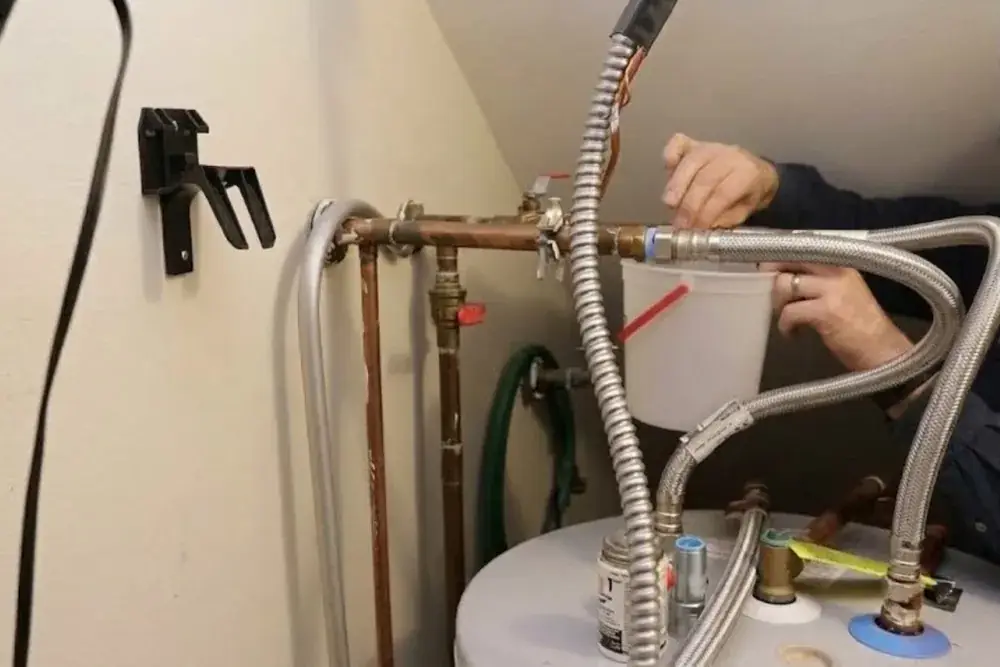
What an anode rod does
The steel tank has a glass lining, and tiny gaps in that lining expose steel to water. The anode rod is made of magnesium or aluminum, which is more reactive than steel, so it gives up its metal first. This is called sacrificial protection. Once the rod is consumed, the steel starts to corrode in its place.
How often to check it
A common recommendation is to inspect the rod every two to three years, and to replace it when it is worn down to about the thickness of a pencil or when the steel core shows. Tanks in houses with high water use or heavy mineral content may use up the rod faster, and a tank with a water softener may corrode a magnesium rod more quickly.
| Material | Strength | Watch for |
|---|---|---|
| Magnesium | Strong protection, common in standard tanks | Wears faster in some water, can smell |
| Aluminum | Lasts longer in some water | Can produce deposits |
| Aluminum with zinc | Reduces rotten egg odor | Wears at a different rate |
| Powered anode | Does not wear out, electrically protects | Higher cost, needs power |
Signs the rod is spent
- Rust-colored hot water, especially after the heater has been idle.
- A rotten egg smell in hot water only, which can signal a reaction with the rod.
- Popping or rumbling from sediment, which can accompany corrosion.
- A heater past six or seven years that has never had the rod checked.
None of these proves the rod is gone, but each is a reason to look. A quick inspection tells you for certain.
How the rod is checked and replaced
The power or gas is turned off and the cold supply is closed. The rod sits under a hex head on top of the tank, and it is removed with a long breaker bar and a socket after the tank pressure is relieved.
If clearance above the heater is tight, a flexible segmented rod is used. A fresh rod is installed with thread sealant, the tank is refilled and the connections are checked.
When replacement is not worth it
If the tank is already leaking or rusted at the seams, a new anode rod will not help. A heater past twelve years with heavy sediment or corrosion may also not justify the work. In that case, water heater replacement is the better plan.
Signs the rod is ready and how to choose a new one
Pull the rod and look at it. If it is thin, pitted or coated in calcium, it has done its job. If the core wire is showing along long stretches, replace it. Magnesium rods protect well in soft or average water, while aluminum rods can suit harder water.
A powered anode uses a small electric current and does not wear down at all. A rod that smells like sulfur may mean bacteria in the tank, which a different rod type can sometimes reduce. Check the tank warranty, since some require a rod inspection.
Commerce City water notes
The South Adams County Water and Sanitation District treats its water to 7 grains per gallon of hardness, which the district says reduces scaling. It notes that customers with in-home softeners should recalibrate to 7 grains per gallon. Softened water can wear a magnesium anode faster, so if you own a softener, check the rod sooner than you would otherwise.
The district's water is disinfected with chlorine and blended from Denver Water and the district's own groundwater. The water quality line is 303-287-6454 if you want the latest report. Water chemistry changes with the source, so a rod that lasted five years in another house may last more or less here.
Checking the rod during other work
The best time to check the rod is when you flush the tank or when a plumber is already on site. A visit for water heater repair often includes a look at the rod, since a failing one can explain leaks and noises. If you live in nearby Brighton, check with Brighton Utilities at 303-655-2117 about your water, since conditions differ between utilities.
What to do before work begins
What to do before pulling a rod: turn off power or gas, close the cold supply, relieve pressure at a hot faucet and let the tank cool. Do not work on a hot tank, and do not use a rod that does not fit the port.
Sources and standards
Commerce City adopted the 2021 International Plumbing Code (IPC) with local amendments, and its Building Safety Division at 303-289-3790 answers permit questions. Under those amendments, relief valve discharge goes to a sanitary drain (section 504.6.1, with replacements exempt) and water heaters need a pan in many installs (section 504.7, with exemptions).
Common questions
Often three to five years, but water chemistry and use change that. Inspect it every two to three years.
Softened water can wear a magnesium rod faster. If you have a softener, check the rod sooner.
The district's water is softened to 7 grains per gallon. A plumber can recommend a rod type based on your heater and water.
It is possible, but the rod is often stuck, and the work needs a long socket and room above the tank. A plumber has the tools.
The cause may be a reaction between the rod and bacteria in the water. A plumber can flush the tank, check the rod and recommend a different type.
A fresh anode rod is the cheapest way to extend a heater's life. Call the line and a Commerce City plumber can inspect yours. See our service area for nearby towns.
Call (303) 552-3896