
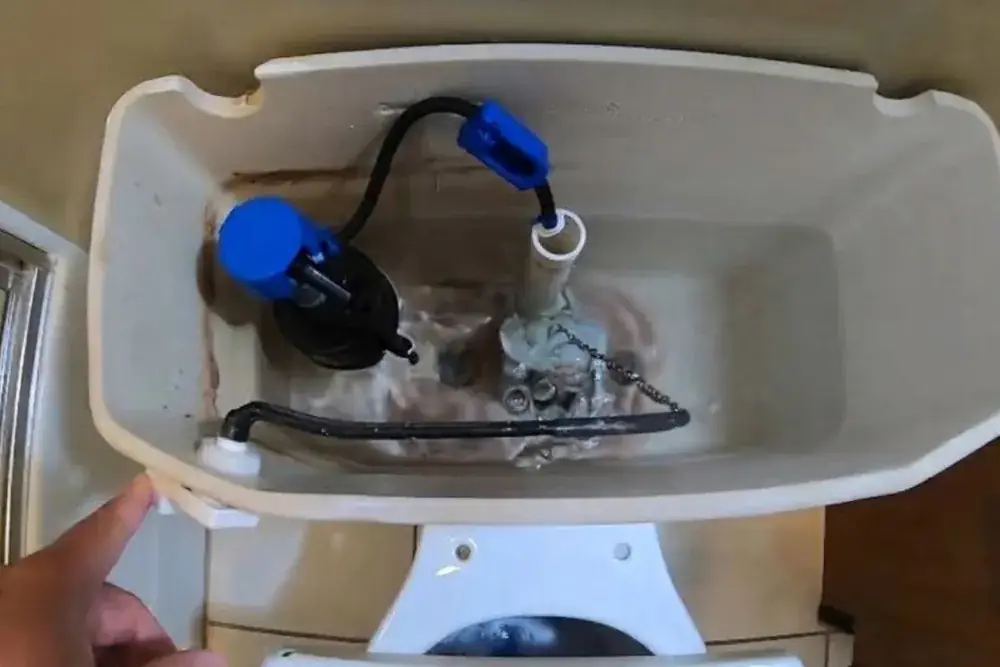
First minute: stop the water
Take the tank lid off and push the flapper down into its seat to stop the flow into the bowl. Then close the shutoff valve on the wall behind the toilet by turning it clockwise. If the valve is stuck or the water keeps coming, turn off the main water valve for the house. Do not flush again.
Contain and protect
Put towels or a wet vacuum on the floor and open windows if the water is dirty. Overflow water from a toilet may carry bacteria, so wear gloves and keep children and pets away. Move rugs and anything absorbent out of the area, and photograph the water for your records.
Clear the clog
A flange plunger, which has a rubber extension that fits into the drain, is the first tool. Seat it firmly and push and pull in slow strokes for twenty seconds, then check whether the water drops. If that does not work, a closet auger passes through the trap and breaks up or retrieves the blockage without scratching the porcelain.
| Cause | Signs | Response |
|---|---|---|
| Too much paper or a toy | Only this toilet clogs | Plunge, then auger |
| Flushable wipes | Repeat clogs, thick mat in the trap | Auger, stop flushing wipes |
| Main drain partly blocked | Other fixtures gurgle or drain slowly | Stop water use, call for drain cleaning |
| Blocked vent | Gurgling, slow drain, odors | Roof vent check by a plumber |
| Sewer line problem | Floor drain backs up | See sewer line cleaning |
Do not use chemical drain cleaners
Drain cleaner poured into a toilet that is full of water can sit in the bowl, damage the porcelain and splash. If you use it and it fails, the plumber has to work around a caustic liquid. A plunger and an auger work without chemistry.
Clean up the right way
Mop with warm water and a disinfectant, wash walls and the baseboard where splashes landed and discard anything porous that was soaked. Dry the area with fans for at least a day, because moisture under the floor can lead to mold. A moisture meter can confirm that the subfloor is dry.
When the overflow keeps coming back
A single clog is one thing. If the toilet overflows repeatedly, or if other drains in the house are slow, the problem is beyond the bowl. Roots, a belly in the line or buildup in the main can all cause repeat overflows. A camera inspection shows the cause, and the next step is a cleaning, a jetting or a repair.
What to do after the water stops rising
Once the toilet is off and the floor is controlled, deal with the water. Wear gloves, since overflow water may carry waste. Soak up the bulk with towels, run a fan and open a window if the weather allows. Throw away porous items that sat in the water, and clean hard surfaces with a household disinfectant.
If the water reached the subfloor or soaked a ceiling below, photograph it and call your insurer. Do not flush again until the clog is cleared, or you risk a second overflow.
Commerce City sewer notes
South Adams County Water and Sanitation District says it handles sewer main backups and overflowing manholes, and takes emergency calls at 303-288-2646 during and after business hours. If a street manhole is overflowing or several neighbors have the same problem, that is the right number. If only your house is affected, the blockage is more likely in your own line.
The district also advises property owners to remove trees and roots near sewer service lines, since private lines can have problems of their own. If a toilet overflows after rain or during irrigation season, mention that when you call, because roots and ground movement often show up then.
When to call a plumber
Call if the plunger and auger do not work, if the overflow comes with other fixtures backing up, or if the toilet is loose, cracked or leaking at the base. The toilet repair and installation page covers replacement and the repair of the toilet itself, and the same crew can handle a visit in nearby Brighton.
Sources and standards
Commerce City adopted the 2021 International Plumbing Code (IPC) with local amendments, and its Building Safety Division at 303-289-3790 answers permit questions. The local amendments require building sewers at least 12 inches below grade (section 305.4.1) and a two-way cleanout (section 708.1.3).
Common questions
Push the flapper down, close the shutoff valve behind the toilet and, if needed, shut off the main. Then contain the water.
A flange plunger works better, since it seals the drain opening. A flat cup plunger is for sinks and tubs.
It can carry bacteria. Wear gloves, disinfect the area and keep people and pets away until it is clean.
If other fixtures gurgle or back up, or if a floor drain backs up, the main line is likely blocked. Stop using water and call.
The South Adams County Water and Sanitation District at 303-288-2646 handles sewer main backups and overflowing manholes.
If the toilet keeps overflowing, call the 24/7 line. A Commerce City plumber can clear the line and check the cause. Our service area covers nearby towns.
Call (303) 552-3896